Herbs & foods20 min
Castor oil (arandi ka tel): external uses for joints, skin, lashes and hair
Thick, sticky castor oil has a long history in Indian homes — rubbed on aching joints, used in warm packs, dabbed on dry skin and brushed onto brows and lashes. This guide focuses on safe external uses; swallowing castor oil is a strong purgative that should be left to doctors.
The Ayurvedic view
Eranda is described in Ayurveda as the best herb for vata disorders — stiffness, pain and dryness — and castor oil features in many traditional formulas for joints and the lower back. Its main component, ricinoleic acid, gives it a heavy, penetrating quality. The seeds themselves are highly poisonous (they contain ricin), but properly processed cold-pressed oil does not. Today its gentlest, safest uses are on the skin.
Ingredients
- Cold-pressed, hexane-free castor oil
- Coconut, almond or sesame oil to dilute
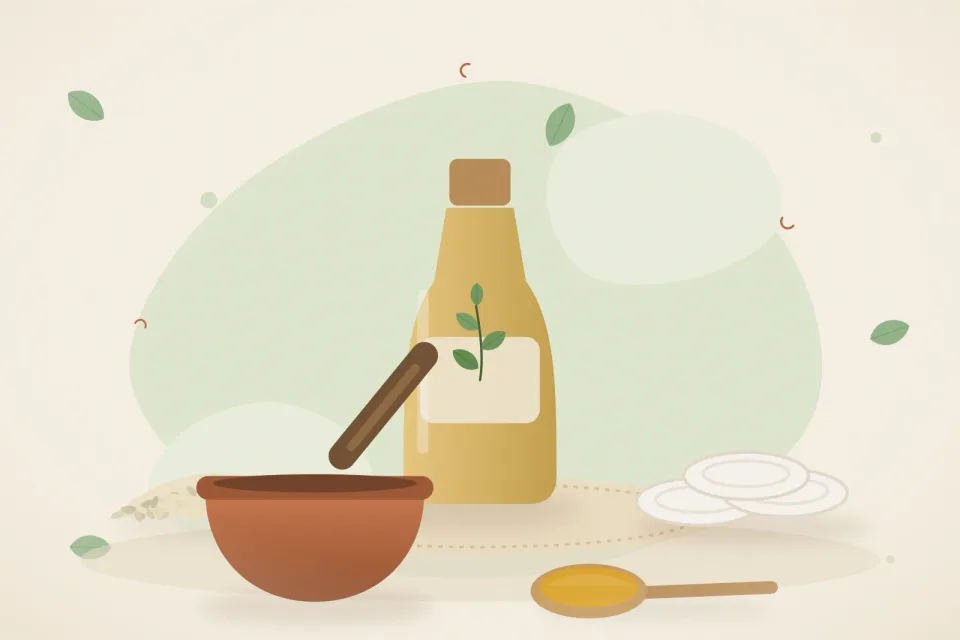
- A soft cotton cloth, cling film and a hot-water bag (for a pack)
How to prepare
- For scalp and skin, mix 1 part castor oil with 2–3 parts lighter oil to make it easier to spread and wash out.
- For a castor-oil pack, warm a tablespoon of castor oil slightly and soak a folded cotton cloth.
How to use
- Joints and lower back: rub a little warm oil onto stiff knees or back, place the soaked cloth over, cover with cling film and a hot-water bag for 20–30 minutes, then wipe off.
- Brows and lashes: with a clean spoolie, apply a very thin coat to brows and the base of lashes at night, keeping it out of the eyes.
- Hair: massage the diluted blend into the scalp an hour before washing, once a week.
- Dry skin and heels: a few drops massaged into cracked heels or rough cuticles at night.
Helpful habits
- Castor oil is very thick — a little goes a long way, and it needs two shampoos to rinse from hair.
- Protect bedsheets and clothes; it stains.
Precautions
- For external use only here. Don't take castor oil by mouth without a doctor's advice — it causes cramps, diarrhoea and dehydration, and must never be used in pregnancy (it can trigger labour) or given to children.
- Never eat castor seeds; they are highly toxic.
- Patch test first. Don't apply on broken skin, rashes or near the eye surface; stop if irritation occurs.
- Avoid heat packs on swollen, hot or red joints, and see a doctor for joint pain with fever or sudden swelling.