Shilajit benefits: what Ayurveda traditionally uses it for
What shilajit is, the benefits Ayurveda traditionally describes — strength, stamina, energy and vitality — and the honest limits of what a supplement can do.
Published 26 September 2026 · 3 min read
Search for "shilajit benefits" and you will find big promises. This guide takes a calmer look: what shilajit actually is, how classical Ayurveda describes it, what it is traditionally used for, and where the evidence is still thin.
What is shilajit?
Shilajit (Sanskrit: shilajatu, "conqueror of rock") is a dark, sticky, mineral-rich resin that seeps out of rock crevices high in the Himalayas during warm months. It forms over a very long time as plant matter breaks down under the rocks. That is why it naturally contains fulvic acid along with a range of minerals.
It is sold as a soft resin, as capsules and tablets, and as powder. The resin is the least processed form.
Shilajit in classical Ayurveda
Classical texts such as the Charaka Samhita count shilajatu among the most valued rasayanas — substances taken in small amounts to support strength, vitality and healthy ageing. It is also described as yogavahi, meaning it is traditionally combined with other herbs to support their action.
In Ayurvedic terms, shilajit is generally considered warming and is used thoughtfully, in small doses, as part of a daily routine rather than as a quick fix.
Traditional shilajit benefits
These are the uses Ayurveda traditionally describes. They are not medical claims:
- Strength and stamina — shilajit is best known as a rasayana for physical strength (bala).
- Everyday energy and vitality — taken in the morning, it is part of many people's daily routine for feeling active.
- Healthy ageing — as a rasayana it is traditionally used to support vitality with age.
- Supporting other herbs — it is often taken with ashwagandha, milk or honey in traditional preparations.
Shilajit is used by both men and women. Searches like "shilajit benefits for men" are common, but shilajit is a general rasayana and not a treatment for any sexual or medical condition.
What does modern research say?
Researchers have studied shilajit and fulvic acid in laboratories and in a few small human studies, but good-quality evidence in people is still limited. It is fair to call shilajit a traditional supplement with a long history, not a proven medicine. Results, if any, vary from person to person and depend on food, sleep and activity too.
How to get the most from shilajit
- Choose a labelled resin from a licensed manufacturer. Raw or unlabelled shilajit may contain impurities. See how to identify original shilajit.
- Take a small amount: the usual label dose is 250–500 mg a day (a rice-grain to pea-sized piece). See how to take shilajit resin.
- Pair it with the basics: regular meals, sleep, movement and less stress.
Our shilajit
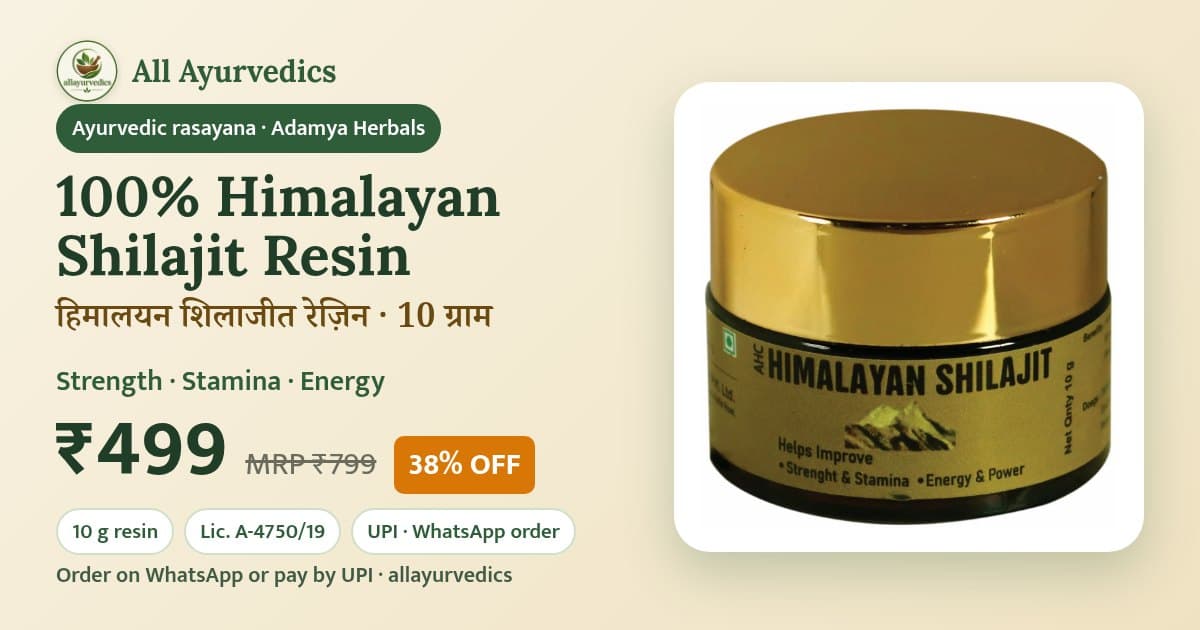
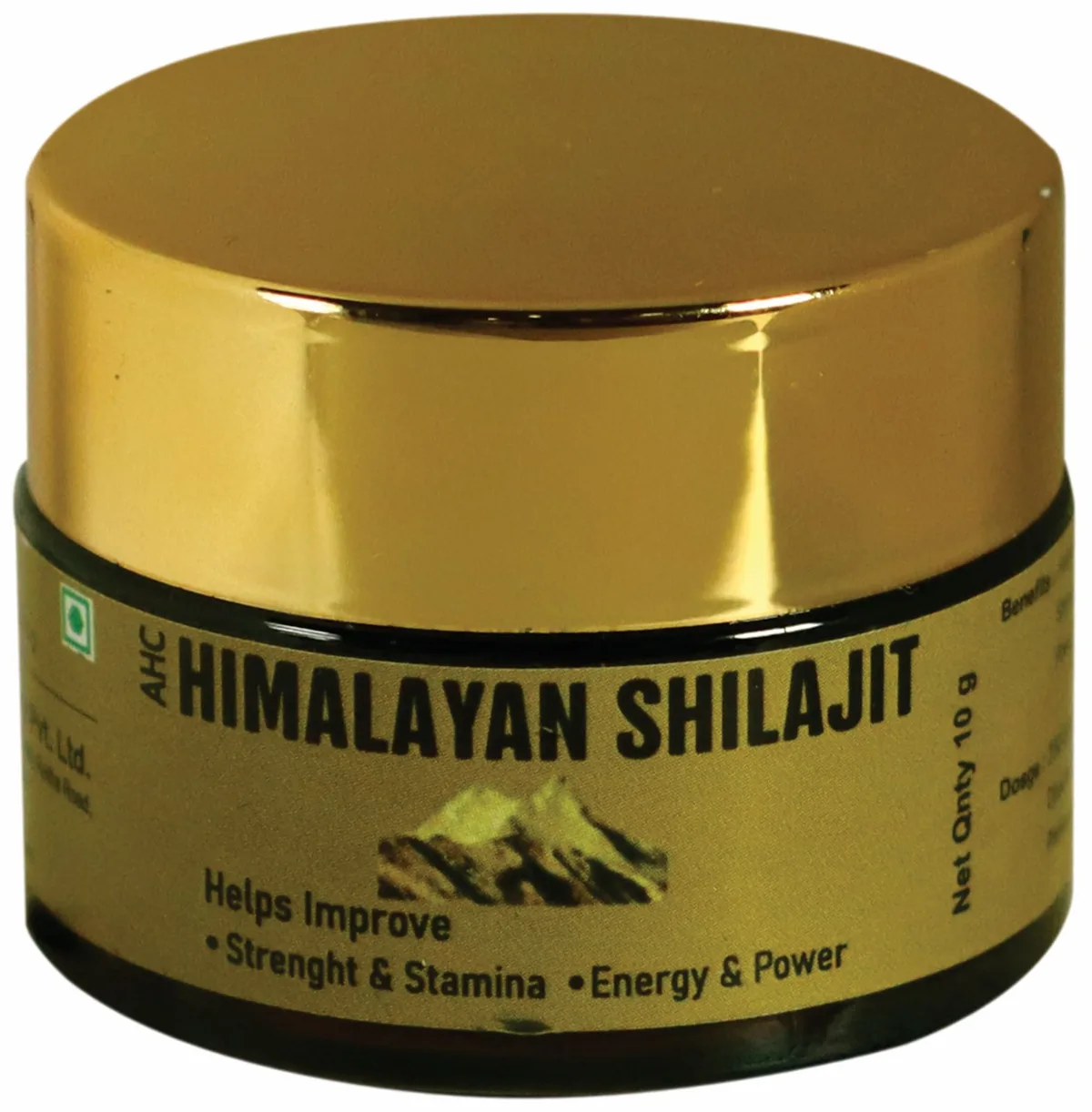
We sell Adamya Herbals Himalayan Shilajit Resin, 10 g for ₹399 (MRP ₹799). It carries manufacturing licence number A-4750/19 on the label. You can order it on WhatsApp or pay by UPI.
Doctor's note
Shilajit is not suitable for everyone. Children under 12, pregnant and breastfeeding women, and anyone with a heart condition, gout or high uric acid, iron overload, a chronic illness or on regular medicines should speak to a doctor first. Read shilajit side effects and who should avoid it before you start. For the full topic, see our shilajit guide.
Frequently asked questions
What are the main benefits of shilajit?
- In Ayurveda, shilajit is traditionally used as a rasayana to support strength, stamina, energy and overall vitality. It is a supplement, not a treatment for any disease.
Is shilajit good for women too?
- Yes, shilajit is traditionally used by both men and women as a general rasayana. Pregnant and breastfeeding women should not take it without a doctor's advice.
How long does shilajit take to show benefits?
- There is no fixed timeline. As a traditional supplement, any effect is gradual and varies from person to person. Take it regularly at the label dose alongside good food and sleep, and stop if it does not suit you.
Does shilajit contain fulvic acid?
- Yes. Shilajit forms from plant matter breaking down over a long time, so it naturally contains fulvic acid and a range of minerals. The exact amount varies by source and product.
Shilajit guides
Benefits, how to take it, pure vs fake, forms, side effects and price — in plain language.
- How to take shilajit resin: dose, timing and the right wayA step-by-step guide to taking shilajit resin — how much, when, with water or milk, how long to continue, and the common mistakes to avoid.
- How to identify original (pure) shilajit: home checks and label checksSimple home checks for pure shilajit resin, why they are only rough guides, and the label and seller checks that matter most.
- Shilajit resin vs capsule vs powder: which form should you choose?An honest comparison of shilajit resin, capsules, powder and gummies — processing, dosing, convenience and what to check on each label.
- Shilajit side effects: precautions and who should avoid itPossible side effects of shilajit, who should not take it or should check with a doctor first, and simple ways to use it more safely.
- Shilajit price in India: how to compare and what to look forHow to compare shilajit prices fairly — per gram and per day — why very cheap shilajit is a warning sign, and what our 10 g resin costs.
Related remedies
 Pudina Benefits and Uses in the KitchenPudina is the mint already on the thali. Use it as chutney, a short tea, or a cooling side with lemon and cumin. This is a kitchen guide, not a medicine note.
 Dhania Benefits and Uses at HomeDhania means both coriander seeds and the fresh leaves. Soak the seeds for a mild cooling water, and use the leaves the way you already do in dal and chutney.
 Hing Benefits and Uses in TadkaHing belongs as a pinch in hot ghee with cumin, poured over dal or vegetables. It is not a raw spoonful, and it is not a digestion medicine.
Related products
Get a weekly dose of Ayurveda
One seasonal tip, one remedy and one simple habit — every week, in English or Hindi. No spam, unsubscribe any time.