Herbs & foods10 min
Mulethi (licorice root): soothing tea for acidity and throat, with a caution on BP
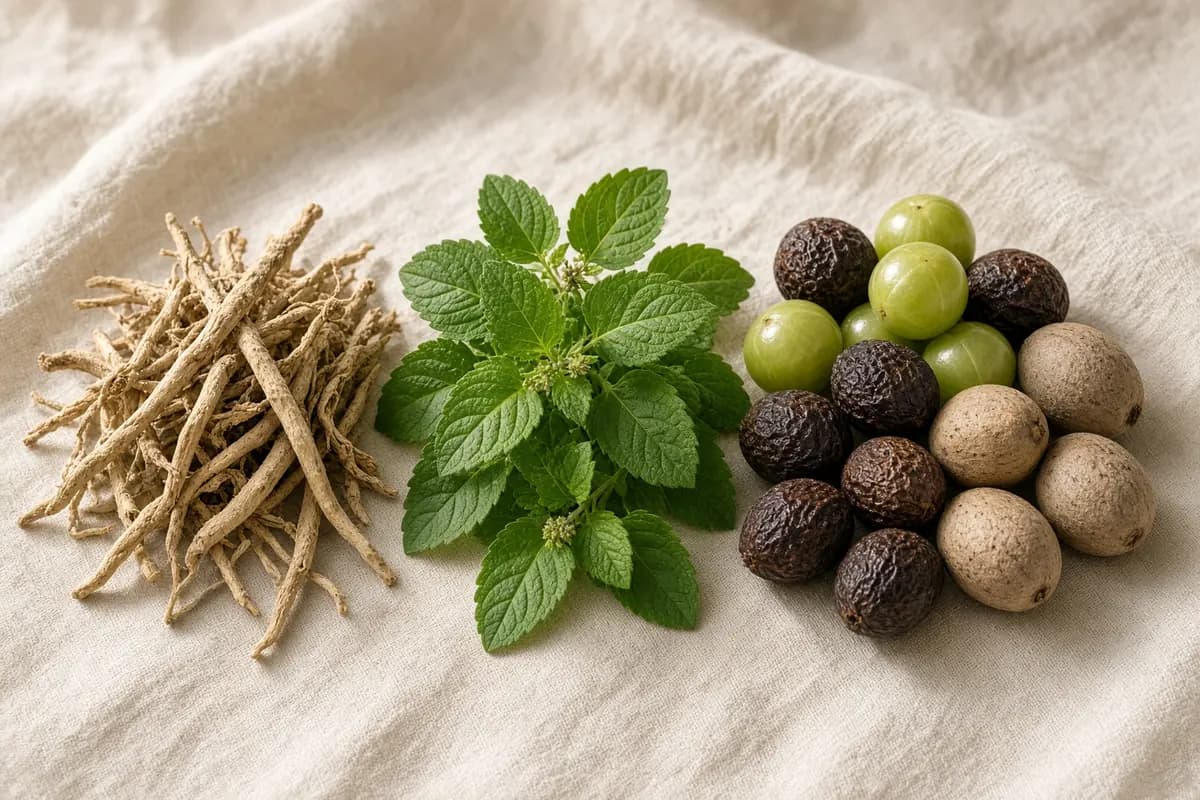
Mulethi sticks have long been chewed by singers and teachers to soothe the throat. The sweet root is also a gentle traditional support for acidity and a common ingredient in skin care. It's powerful, though — regular large amounts can raise blood pressure.

The Ayurvedic view
Yashtimadhu, meaning ‘sweet stick’, is described in Ayurveda as sweet and cooling, soothing pitta and vata, softening the throat and chest, calming inflamed stomach lining and nourishing the voice, eyes and skin. Its main compound, glycyrrhizin, is responsible both for the sweetness and for the side effects: in excess it causes the body to retain salt and lose potassium. Short, modest use is the key.
Ingredients
- A 2-inch piece of mulethi stick, or ¼–½ teaspoon mulethi powder
- 1 cup water
- A few saunf seeds or a small piece of ginger (optional)
How to prepare
- Crush the stick lightly and simmer in the water with saunf for 5 minutes; strain.
- Or stir mulethi powder into warm water and let it stand for 5 minutes.
How to use
- Sip mulethi tea once a day after meals for acidity or a scratchy throat, for up to one or two weeks.
- Chew a small piece of mulethi stick slowly when your voice is tired from overuse.
- Externally, a pinch of mulethi powder mixed with rose water or curd makes a soothing face pack.
Helpful habits
- Buy whole sticks from a trusted shop; they should smell sweet and earthy.
- Rest your voice and sip warm water — these matter as much as any remedy.
Precautions
- Avoid if you have high blood pressure, heart disease, kidney disease or low potassium, and don't use it regularly for more than 2 weeks without advice.
- Avoid during pregnancy; not for young children except on medical advice.
- Mulethi can interact with BP medicines, diuretics, steroids, digoxin and blood thinners — check with your doctor.
- Persistent acidity, hoarseness longer than three weeks, or trouble swallowing needs a doctor's evaluation.