Ayurvedic diet basics: six tastes, simple rules and a balanced plate
You don't need exotic superfoods to eat the Ayurvedic way. Learn the six tastes, the most useful eating habits and how to build a balanced Indian thali.
Published 28 August 2026 · 3 min read
Ayurveda treats food as the first medicine. The classical texts spend as much time on how, when and where to eat as on what to eat. The good news is that a traditional Indian home kitchen already follows many of these principles. This guide pulls them together.
The six tastes (shad rasa)
Ayurveda recognises six tastes, each built from particular elements and each with its own effect on the doshas:
- Sweet (madhura) — grains, milk, ghee, dates, sweet fruits. Nourishing and grounding. Calms vata and pitta; increases kapha in excess.
- Sour (amla) — lemon, amla, curd, tamarind. Stimulates appetite. Calms vata; can aggravate pitta and kapha.
- Salty (lavana) — rock salt, sea salt. Improves taste and digestion. Calms vata; too much increases pitta and kapha.
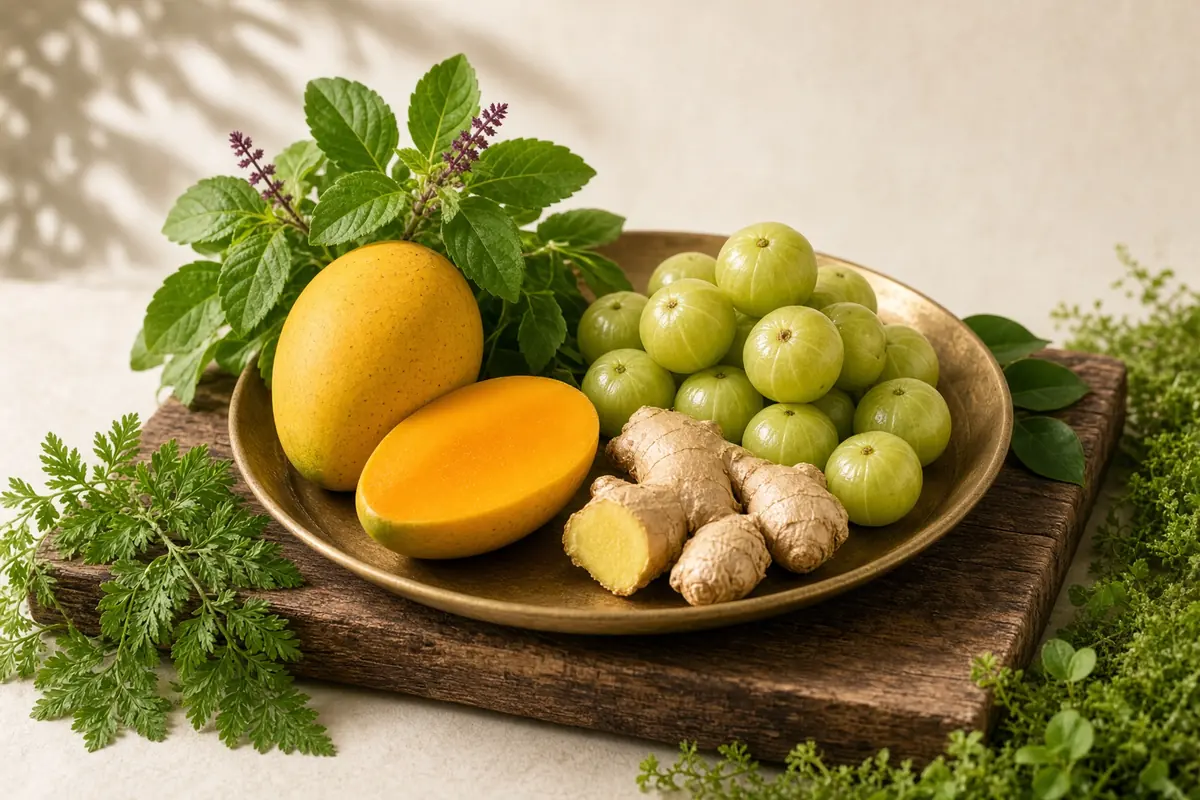
- Pungent (katu) — ginger, black pepper, chilli, garlic. Heating and clearing. Reduces kapha; can aggravate pitta and vata.
- Bitter (tikta) — bitter gourd, fenugreek, neem, leafy greens. Light and detoxifying. Reduces pitta and kapha; can increase vata.
- Astringent (kashaya) — lentils, pomegranate, unripe banana, green tea. Drying and firming. Reduces pitta and kapha; can increase vata.
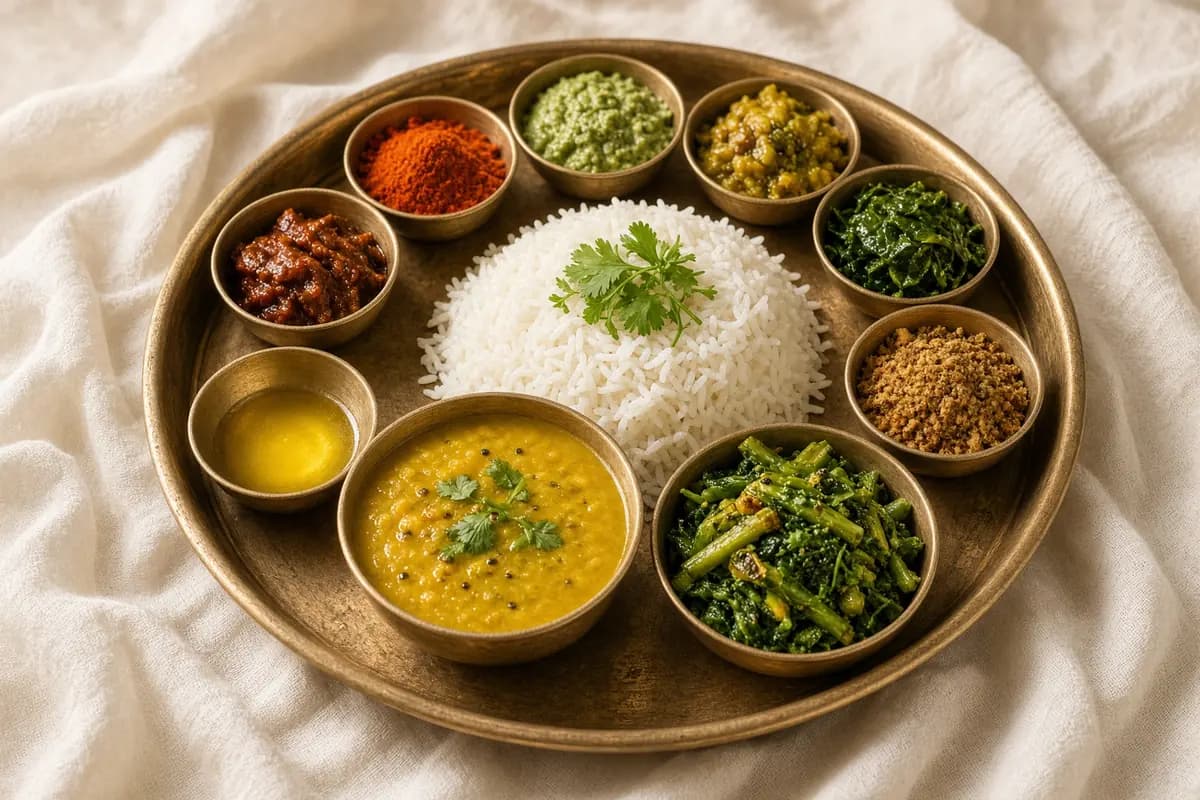
A balanced meal includes all six tastes in some measure. That is exactly what a traditional thali does: rice or roti (sweet), dal (astringent), a squeeze of lemon or pickle (sour), a pinch of salt, a spiced sabzi (pungent) and a bitter vegetable or methi.
Principles of how to eat
Ayurveda's eating guidelines are simple and surprisingly modern:
- Eat when you are hungry, and when the previous meal has been digested. Constant grazing is discouraged.
- Make lunch the main meal, when digestion is strongest. Keep dinner lighter and earlier.
- Eat freshly cooked, warm food where possible. Leftovers that have been refrigerated for days are considered heavy and less nourishing.
- Sit down and eat calmly. Eating while walking, arguing or scrolling on a phone is thought to weaken digestion.
- Chew well and eat at a moderate pace. Stop when you are about three-quarters full, leaving room for digestion.
- Sip warm water with meals rather than large amounts of iced drinks.
Food combinations to be careful with
Ayurveda describes certain combinations as viruddha ahara — incompatible foods that can be hard to digest together. Commonly mentioned examples include:
- Milk with sour fruits, fish, or salty foods.
- Honey heated or cooked, or mixed with an equal amount of ghee.
- Curd at night, or heated curd.
- Fruit eaten immediately after a heavy meal.
Modern science has not studied all of these in detail, but many people notice they feel lighter when they follow them.
Building an Ayurvedic plate
A simple way to plan meals:
- Half the plate: seasonal vegetables, cooked with digestive spices.
- A quarter: whole grains — rice, wheat, millets such as jowar, bajra and ragi.
- A quarter: protein — dal, beans, paneer, curd at lunch, or eggs and fish if you eat them.
- A teaspoon of ghee or cold-pressed oil, a little fresh chutney, and warm water.
Spices as everyday support
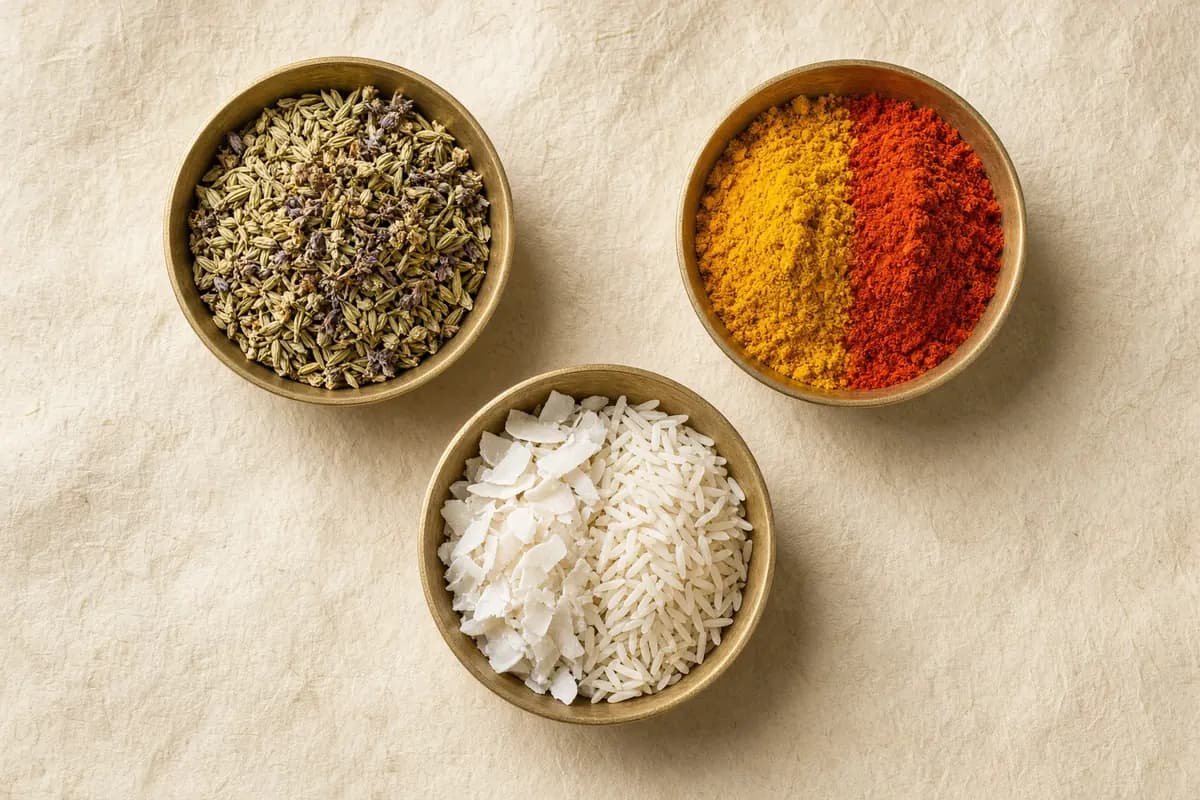
The Indian masala box is a small pharmacy of digestive support. Cumin, coriander, fennel, turmeric, ginger, black pepper, ajwain and hing are used to make food easier to digest and to balance the heaviness of pulses and grains. Use them in cooking amounts; you don't need supplements to benefit.
Eating for your constitution
Once you understand the doshas, you can fine-tune your diet:
- Vata-predominant people do well with warm, moist, slightly oily foods and regular mealtimes.
- Pitta-predominant people benefit from cooling, less spicy food and not skipping meals.
- Kapha-predominant people thrive on lighter, warm, well-spiced meals and fewer sweets and dairy.
Keep it realistic
Ayurvedic eating is not about perfection. A home-cooked dal-chawal with a spoon of ghee and some vegetables, eaten calmly at the right time, is more Ayurvedic than an expensive "superfood" smoothie gulped at the desk.
If you have diabetes, high blood pressure, kidney disease, food allergies or are pregnant, your diet needs to be planned with your doctor or a registered dietitian. Ayurvedic principles can usually be adapted to fit within that advice.
Related remedies
 Karela (bitter gourd) stir-fry for a balanced plateBitter taste (tikta rasa) is traditionally recommended in Ayurveda for people managing blood sugar. A simple karela sabzi is a tasty way to bring more bitter vegetables and fibre to the plate — as food, not medicine.
 Kidney stone prevention habits: water, lemon and a balanced plateKidney stones are painful and tend to come back. The single most useful habit is drinking enough water to pass about 2–2.5 litres of urine a day; lemon water, less salt and sensible protein portions also help. Stones themselves need medical evaluation.
 How to get glowing skin naturally: a simple Ayurvedic morning and night routineWondering how to get glowing skin naturally without a shelf full of products? In Ayurveda, glow (prabha) comes from good digestion, sound sleep and gentle daily care. This simple morning-and-night routine combines a besan ubtan, a few drops of oil and the habits that make skin look rested and healthy.
Get a weekly dose of Ayurveda
One seasonal tip, one remedy and one simple habit — every week, in English or Hindi. No spam, unsubscribe any time.