Dinacharya: a simple Ayurvedic daily routine you can actually keep
Ayurveda believes health is built in small, repeated habits. Here is a realistic version of dinacharya — the classical daily routine — for busy modern lives.
Published 20 September 2026 · 4 min read
Ayurveda has a very practical idea at its heart: the body loves rhythm. When we wake, eat, work and sleep at roughly the same times each day, digestion settles, energy becomes steadier and the mind feels less scattered. The classical texts call this daily rhythm dinacharya — literally, "the conduct of the day".
You do not need to follow every step described in the old texts to benefit. Think of dinacharya as a menu. Start with two or three habits that feel easy, keep them for a month, and then add more.
Why routine matters in Ayurveda
According to Ayurveda, the day moves through cycles dominated by the three doshas. Early morning and evening carry the heavy, steady quality of kapha; midday, when the sun is highest, is ruled by the fiery pitta; and the pre-dawn hours and late afternoon belong to the light, mobile vata. Aligning our activities with these natural qualities — eating the biggest meal when digestion is strongest, winding down as the evening grows heavy — is the logic behind the routine.
Morning: set the tone
Wake early. Ayurveda recommends rising before sunrise, in the calm period sometimes called brahma muhurta. If you currently wake at eight, do not jump to five. Move your alarm fifteen minutes earlier each week until you reach a time that works.
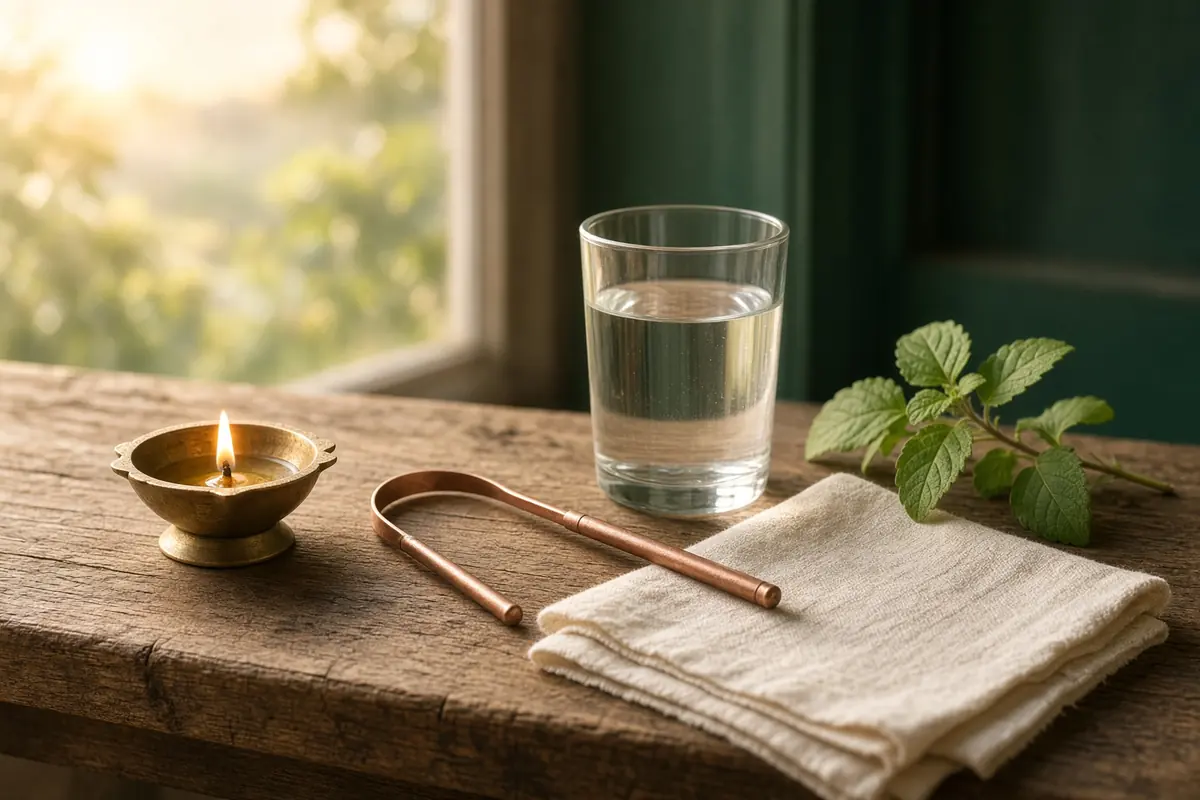
Clean the senses. After using the toilet, brush your teeth and gently scrape your tongue from back to front with a steel or copper tongue cleaner. This takes ten seconds and leaves the mouth noticeably fresher. Splash your eyes with cool water. Some people also practise oil pulling — swishing a spoon of sesame or coconut oil around the mouth for a few minutes — before brushing.
Drink warm water. A glass of lukewarm water on waking helps rehydrate the body after the night and gently encourages a bowel movement. Ayurveda considers a regular, comfortable morning evacuation an important sign of balanced digestion.
Move your body. Ten to thirty minutes of movement is enough: a brisk walk, a few rounds of surya namaskar, or simple stretches. Ayurveda suggests exercising to about half of your capacity — you should feel warm and lightly sweaty, not exhausted.
Self-massage (abhyanga). Before your bath, massage warm oil into your skin for five to ten minutes. Sesame oil suits most people in cooler months; coconut oil is a cooling choice in summer. Even a quick oiling of the scalp and feet is worthwhile on busy days. Then bathe with warm, not hot, water.
A few minutes of stillness. Sit quietly for five minutes, watch your breath, or practise a simple pranayama such as slow alternate-nostril breathing. This short pause makes a real difference to how the rest of the day feels.
Midday: eat your main meal
Ayurveda teaches that agni, the digestive fire, is strongest around midday. That makes lunch the best time for your largest, most varied meal. Sit down, eat without screens where possible, and chew slowly. A short, easy walk of a hundred steps or so after eating is traditionally recommended; a heavy nap straight after lunch is not.
Between meals, give digestion a rest rather than snacking constantly. If you are hungry, choose a piece of fruit, a few soaked nuts, or a cup of warm herbal tea.
Evening: slow down
As the light fades, Ayurveda encourages us to switch from doing to unwinding.
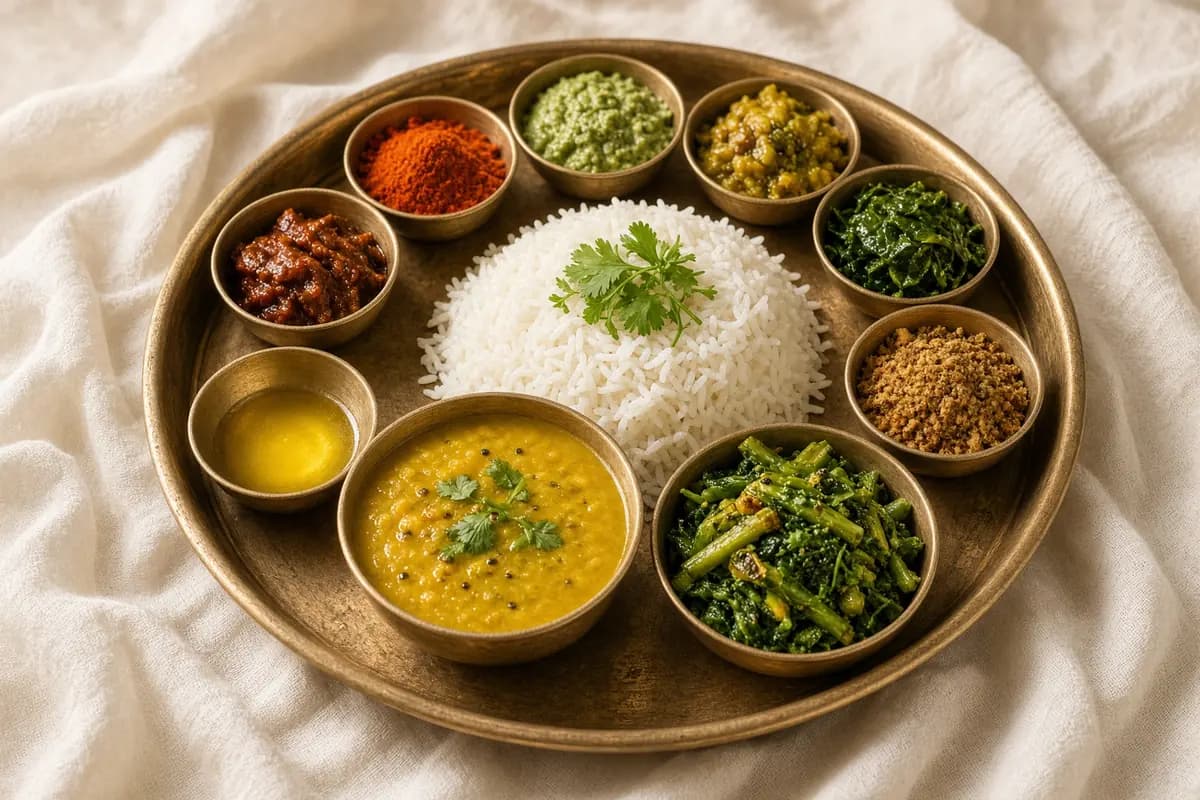
- Eat a lighter dinner, ideally two to three hours before bed. Soups, khichdi, dal with vegetables and chapati are good choices.
- Dim the lights and reduce screens in the last hour before sleep.
- A warm foot massage with a little oil, or a cup of warm milk with a pinch of cardamom, helps many people settle.
- Aim to be in bed by around ten o'clock, before the "second wind" of late-night energy arrives.
A realistic starter routine
If all of this feels like a lot, begin here:
- Wake at the same time every day, including weekends.
- Scrape your tongue and drink a glass of warm water.
- Move for fifteen minutes.
- Make lunch your main meal and dinner lighter.
- Switch off screens thirty minutes before bed.
Keep these five habits for four weeks and notice how your sleep, digestion and energy change. Then add abhyanga, meditation or an earlier bedtime.
A note on flexibility
Dinacharya is guidance, not a rulebook. Night-shift workers, new parents and people with health conditions will need to adapt it. The spirit of the practice is simple: regularity, attention and kindness towards your own body. If you have a medical condition, are pregnant, or take regular medication, talk to your doctor or a qualified Ayurvedic practitioner before making big changes — for example, to fasting or exercise.
Small steps, repeated daily, are what Ayurveda has always meant by lifestyle medicine.
Related remedies
 Fatty liver diet: less sugar and refined carbs, more fibre and daily walksNon-alcoholic fatty liver disease is now extremely common in India, often found by chance on an ultrasound. It's closely tied to weight, sugar and inactivity — which means diet and exercise, guided by your doctor, are the main treatment.
 How to get glowing skin naturally: a simple Ayurvedic morning and night routineWondering how to get glowing skin naturally without a shelf full of products? In Ayurveda, glow (prabha) comes from good digestion, sound sleep and gentle daily care. This simple morning-and-night routine combines a besan ubtan, a few drops of oil and the habits that make skin look rested and healthy.
 Warm Water on Waking, in a Simple CupDrink one glass of warm water when you wake, from a steel or clay cup. It is a morning habit. This page does not claim that copper, or any cup, cures disease.
Get a weekly dose of Ayurveda
One seasonal tip, one remedy and one simple habit — every week, in English or Hindi. No spam, unsubscribe any time.