Arjuna bark: Ayurveda's traditional heart herb, and why your cardiologist must know
The bark of the arjuna tree has been Ayurveda's foremost heart tonic for centuries, traditionally boiled in milk as arjuna ksheerpaka. It's widely used today for heart health, but it's not a substitute for heart medicines and can interact with them.
Important: this remedy is only a supportive home measure. Keep taking any medicine your doctor has prescribed, monitor your readings, and consult your doctor before adding anything new.
The Ayurvedic view
Arjuna (Terminalia arjuna) is a tall tree of riverbanks, and its bark is described in Ayurveda as astringent and cooling, strengthening the heart (hridya) and helping with bleeding and healing of fractures and wounds. Some small clinical studies suggest arjuna may help people with stable angina or heart failure as an add-on to standard treatment, but the evidence is limited. Because it may affect heart rate, blood pressure and clotting, it belongs in the hands of your doctor, not self-prescription.
Ingredients
- 1 teaspoon arjuna bark powder (about 3 g) from a reputable, tested brand
- ½ cup milk and ½ cup water
- A little mishri (optional)
How to prepare
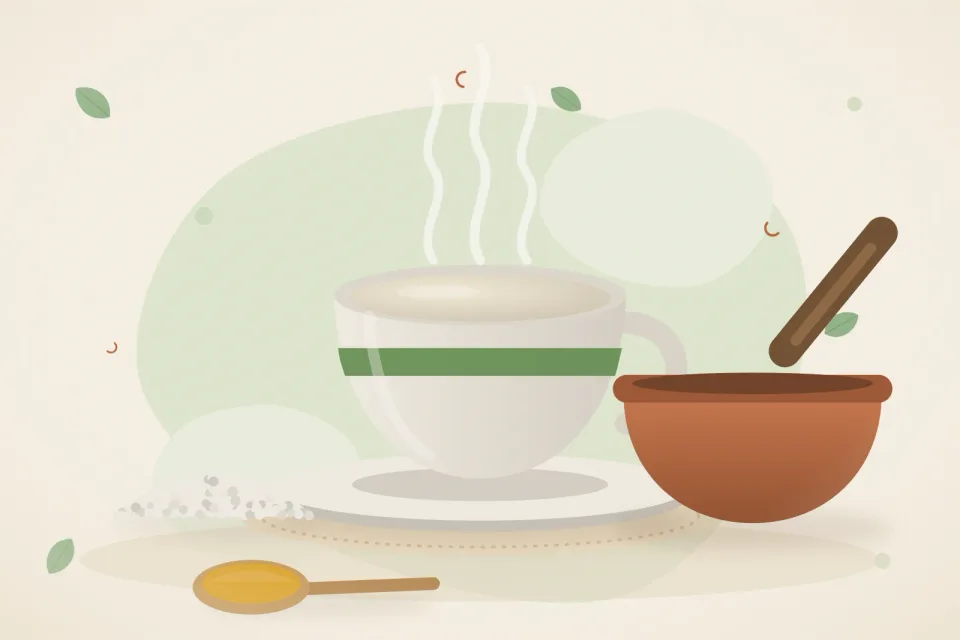
- Traditional ksheerpaka: simmer the arjuna powder in the milk–water mix until it reduces to about half a cup.
- Strain and drink warm.
How to use
- Only if your doctor agrees: take once a day, usually in the morning, and follow up as advised.
- Pair it with the proven foundations of heart care — no smoking, daily walking, less salt and fried food, healthy weight, and regular checks of BP, sugar and cholesterol.
Helpful habits
- Keep a written list of all herbs and supplements to show your cardiologist at each visit.
- Arjuna has an astringent taste; the milk makes it smoother.
Precautions
- Continue all prescribed heart medicines (such as antiplatelets, statins, beta-blockers or BP medicines) — never replace or reduce them on your own.
- Arjuna may lower BP and heart rate and increase the effect of blood thinners; people on these medicines must consult their cardiologist before use.
- Not for pregnant or breastfeeding women or children. It may cause constipation.
- Chest pain, pressure or tightness, breathlessness, sweating or pain spreading to the arm or jaw is an emergency — call an ambulance or go to the nearest hospital immediately.