Joints20 min
Everyday lower back pain: warm oil, heat and gentle movement
Most lower back pain comes from strained muscles, long hours of sitting and poor posture, and improves within a few weeks. Warm sesame oil massage, a hot compress and gentle stretches help — while staying active is the most important step.
The Ayurvedic view
Ayurveda describes back pain (katishool) mostly as a vata disorder: stiffness, dryness and pain made worse by cold, irregular routine, travel and overexertion. Warmth, oil and regular, gentle movement soothe vata. Modern advice agrees: prolonged bed rest usually slows recovery, while walking and light stretching speed it up.
Ingredients
- 2 tablespoons sesame oil, warmed (with a pinch of ajwain sizzled in and strained, if you like)
- A hot-water bag or towel warmed on a tawa
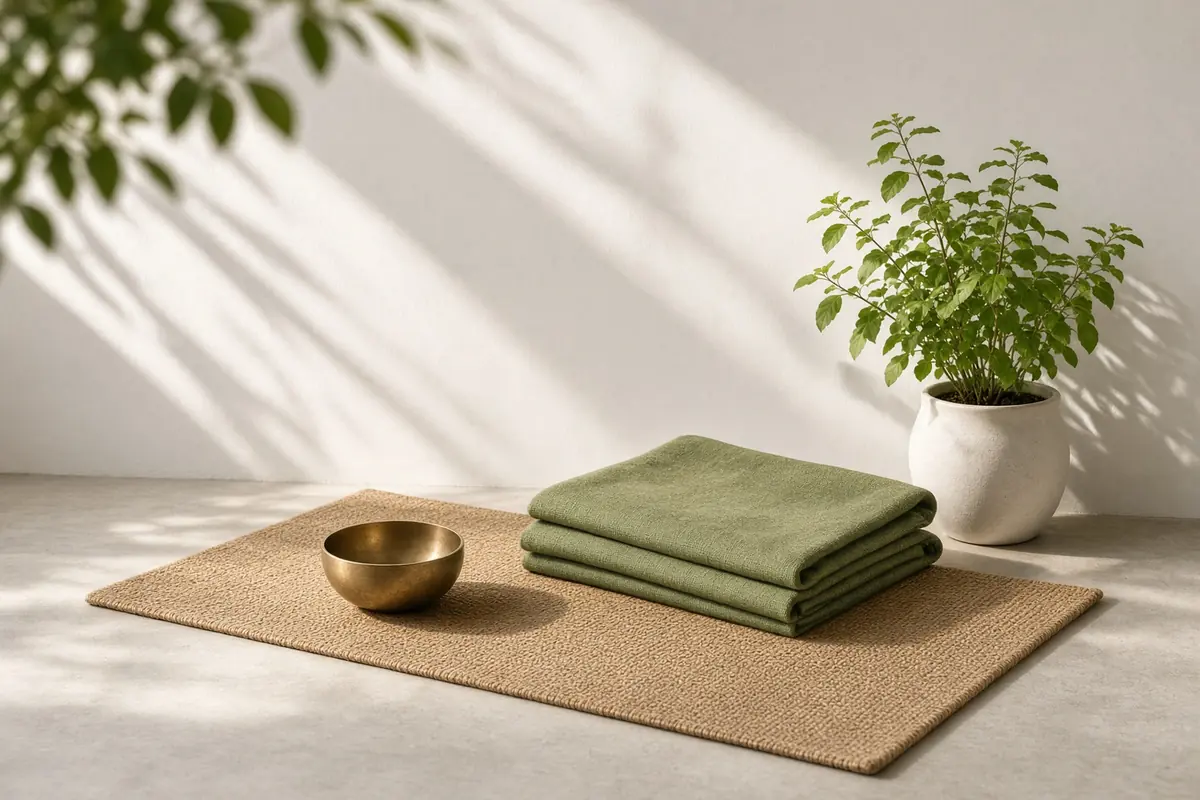
- A yoga mat or rug
How to prepare
- Warm the oil gently and test it on the wrist.
- Fill the hot-water bag with hot (not boiling) water and wrap it in a thin towel.
How to use
- Ask someone to massage the lower back with warm oil in long strokes and circles for 10 minutes, avoiding pressure directly on the spine.
- Lie down with the warm bag under or over the lower back for 15 minutes.
- Do gentle movements twice a day: knees-to-chest, cat-cow and lying pelvic tilts, 5–10 slow repetitions each, only within a pain-free range.
- Walk a little every few hours.
Helpful habits
- Break up sitting every 30–45 minutes; keep your screen at eye level and feet flat on the floor.
- Bend at the knees, not the waist, when lifting, and keep loads close to the body.
- Sleep on a firm but comfortable mattress; a pillow between the knees can help side sleepers.
Precautions
- Avoid heat on a fresh injury with swelling for the first 48 hours (use a cold pack), and never sleep on a hot-water bag.
- Go to a doctor urgently for back pain after a fall or accident, pain with fever, weight loss, numbness in the groin, leg weakness, loss of bladder or bowel control, or pain that is severe at night.
- Pain spreading down the leg, or lasting more than 4–6 weeks, needs medical review.