Herbs & foods10 min
Jeera (cumin): roasted jeera powder and other everyday digestive uses
Cumin is the backbone of the Indian tadka. A jar of freshly roasted jeera powder — sprinkled on raita, buttermilk, chaat and fruit — is one of the simplest ways to add flavour and gentle digestive support to daily meals.
The Ayurvedic view
Jiraka literally means ‘that which aids digestion’ in Sanskrit. Ayurveda describes cumin as pungent and mildly warming yet not overheating, balancing all three doshas and especially helpful for weak digestion, bloating and loose stools. It's also traditionally recommended after childbirth and for improving taste. Unlike many spices, cumin suits most constitutions when used in food amounts.
Ingredients
- 4 tablespoons whole cumin seeds
- Black salt and black pepper (optional, for a chaat-style mix)
How to prepare
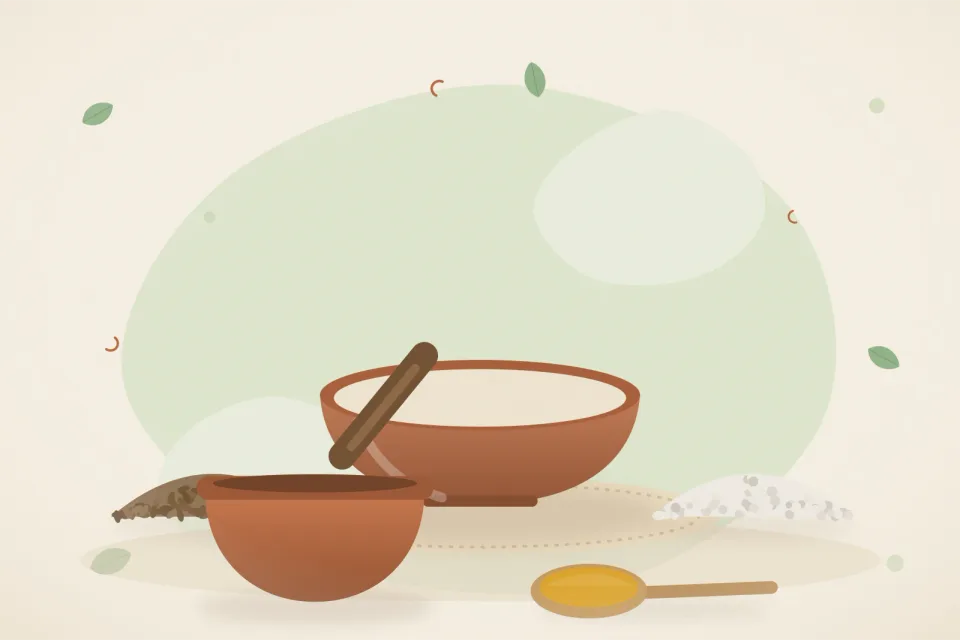
- Dry-roast the cumin in a heavy pan on medium-low heat, stirring constantly, until it darkens a shade and smells nutty (2–3 minutes). Don't let it burn.
- Cool completely and grind coarsely. Store in an airtight jar and use within a month.
How to use
- Sprinkle a pinch on curd, raita, buttermilk, fruit chaat, salads and chutneys.
- Make jeera rice: temper 1 teaspoon whole jeera and a bay leaf in ghee, then add washed rice and water — a light accompaniment for dal.
- Use whole jeera in the tadka for dal, sabzi and khichdi daily.
Helpful habits
- Whole seeds keep flavour much longer than bought powder.
- Shahi jeera (black cumin, caraway-like) is a different spice used in biryanis — not the same as kalonji either.
Precautions
- Cumin in food is safe for almost everyone, including in pregnancy.
- Concentrated cumin supplements may lower blood sugar and affect clotting — check with your doctor if you take diabetes medicines or blood thinners.
- Recurring indigestion, loose motions or bloating that doesn't settle needs a doctor's evaluation.