Hair20 min
Neem-infused coconut oil and a lemon-water rinse for dandruff
Itchy scalp and white flakes on your shoulders? Warm coconut oil infused with neem leaves, followed by a mild lemon rinse after washing, is a traditional two-step routine for keeping dandruff under control.
The Ayurvedic view
Dandruff comes in two broad types. Dry, fine flakes with a tight scalp suggest vata dryness; greasy, yellowish flakes with itching point to kapha and pitta. In both, a yeast that lives on everyone's scalp tends to overgrow. Neem is valued in Ayurveda for its bitter, cleansing nature, coconut oil soothes the scalp, and a diluted lemon rinse helps remove residue. Regular washing matters as much as oiling.
Ingredients
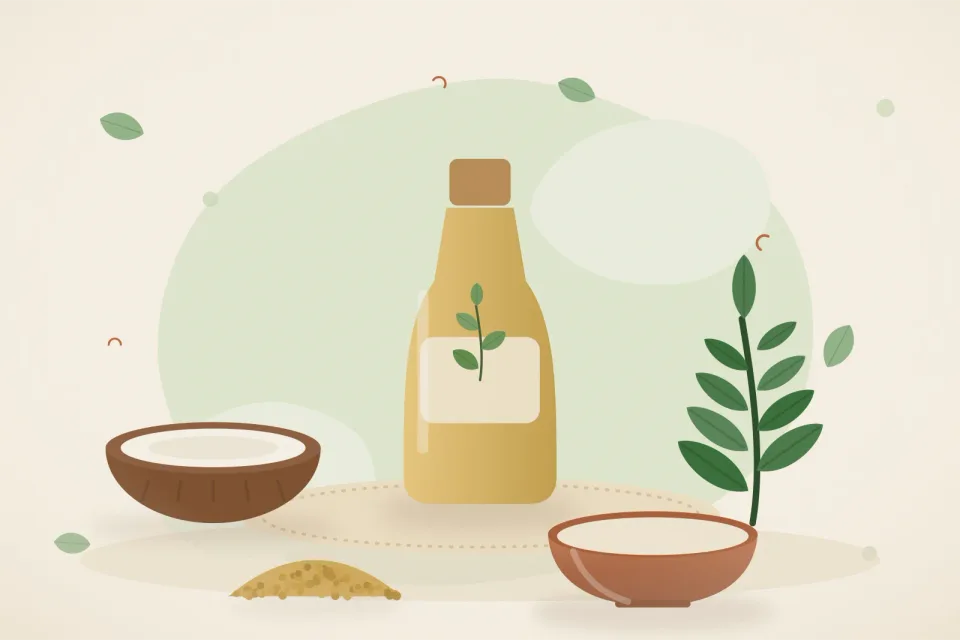
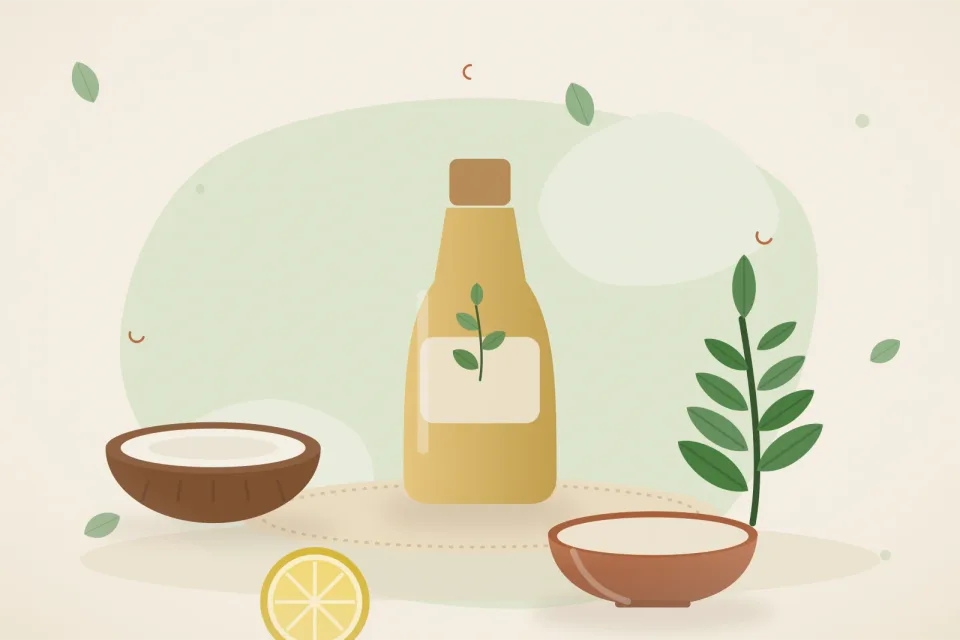
- ½ cup coconut oil
- A handful (about 15–20) fresh neem leaves, washed and completely dried
- Juice of ½ lemon in 1 mug of water, for rinsing
How to prepare
- Heat the coconut oil on low, add the neem leaves and let them sizzle gently for 5–7 minutes until crisp. Don't let them burn.
- Cool, strain into a clean dry bottle and store for up to a month.
How to use
- Warm 1–2 tablespoons of oil and massage into the scalp (not the lengths) for 5 minutes.
- Leave for 30–60 minutes — not overnight if your dandruff is greasy — then wash with a mild shampoo.
- After the final rinse, pour the lemon water over the scalp, wait a minute and rinse with plain water.
- Repeat twice a week for a month.
Helpful habits
- Wash hair at least two or three times a week; oil left on too long can feed dandruff.
- Don't share combs or towels, and wash pillowcases weekly.
- Manage stress and limit very sugary, fried food.
Precautions
- Lemon can sting scratched or broken skin — skip it if your scalp is raw.
- Patch-test the neem oil on the inner arm first.
- See a dermatologist if flakes are thick, yellow or crusted, spread to the face, ears or eyebrows, come with red patches or hair loss, or don't improve in a month — it may be seborrhoeic dermatitis, psoriasis or a fungal infection.