Home remedies for sciatica pain: heat, gentle stretches and staying active
Sciatica is a burning or electric pain that travels from the lower back or buttock down the back of one leg. These home remedies for sciatica — alternating cold and warm compresses, gentle stretches, short frequent walks instead of bed rest, and better sitting posture — help many people through a flare, which often settles within a few weeks.
Home remedies for sciatica: why the leg hurts
The sciatic nerve runs from the lower spine through the buttock and down each leg. A bulging disc, narrowed spinal canal or tight piriformis muscle can press on it, causing pain, tingling or numbness in the leg. Most cases improve with time and activity; long bed rest usually slows recovery.
Ayurveda describes this as gridhrasi (named after the vulture-like gait it causes), a vata disorder, and uses warm oil, fomentation (swedana) and medicated enemas (basti) under supervision.
Ingredients
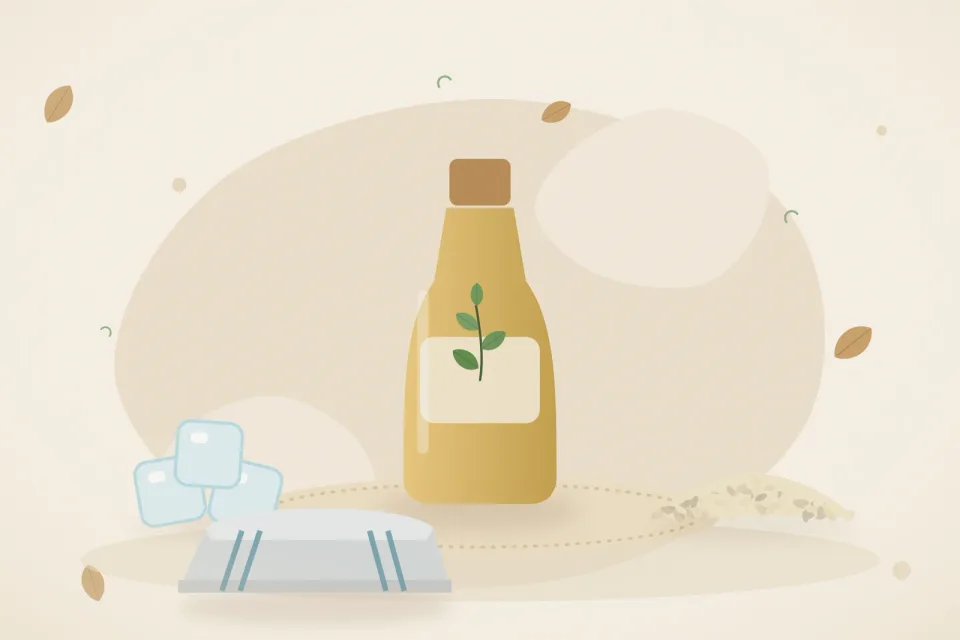
- An ice pack wrapped in a towel
- A hot water bag
- Warm sesame or mahanarayan oil
- A firm cushion or rolled towel for lumbar support
How to prepare
- Keep the ice pack in the freezer and the oil warmed in a bowl of hot water.
How to use
- In the first 2–3 days, apply ice for 15 minutes a few times a day; after that, use heat for 15–20 minutes.
- Gently massage the lower back and buttock with warm oil.
- Do knee-to-chest stretches and a gentle seated piriformis stretch, holding each 20–30 seconds, as long as they don't increase leg pain.
- Walk for 5–10 minutes every hour or two rather than lying down all day.
Helpful habits
- Sit with a cushion behind your lower back and feet flat on the floor.
- Avoid lifting heavy objects and twisting; bend your knees when picking things up.
- Sleep on your side with a pillow between the knees.
Precautions
- Stop any stretch that makes leg pain, numbness or tingling worse.
- Pregnant women often get sciatica-like pain; check with a doctor or physiotherapist before exercises. Sciatica is rare in children and needs a doctor's review.
- Ask your doctor before painkillers if you have ulcers, kidney disease or take blood thinners.
- Seek urgent care for numbness around the groin or buttocks, loss of bladder or bowel control, weakness in the leg or foot drop, pain in both legs, or pain after a fall or with fever.
Frequently asked questions
How long does sciatica last?
- Most sciatica improves within 4–6 weeks. Pain lasting longer or getting worse should be checked by a doctor.
Is walking good for sciatica?
- Yes, short, frequent walks usually help more than bed rest.
Heat or ice for sciatica?
- Ice may help in the first few days; heat usually feels better afterwards. Use whichever eases your pain.