How to identify original (pure) shilajit: home checks and label checks
Simple home checks for pure shilajit resin, why they are only rough guides, and the label and seller checks that matter most.
Published 26 September 2026 · 3 min read
Because shilajit is valuable, the market has many low-quality and mixed products. People often search "original shilajit kaise pehchane" or "asli shilajit ki pehchan". Home tests can help you spot obvious problems, but no home test can prove purity. Here is what to check, in order of importance.
1. Check the label first (most important)
A genuine, legally sold Ayurvedic product in India should clearly show:
- Manufacturer's name and full address
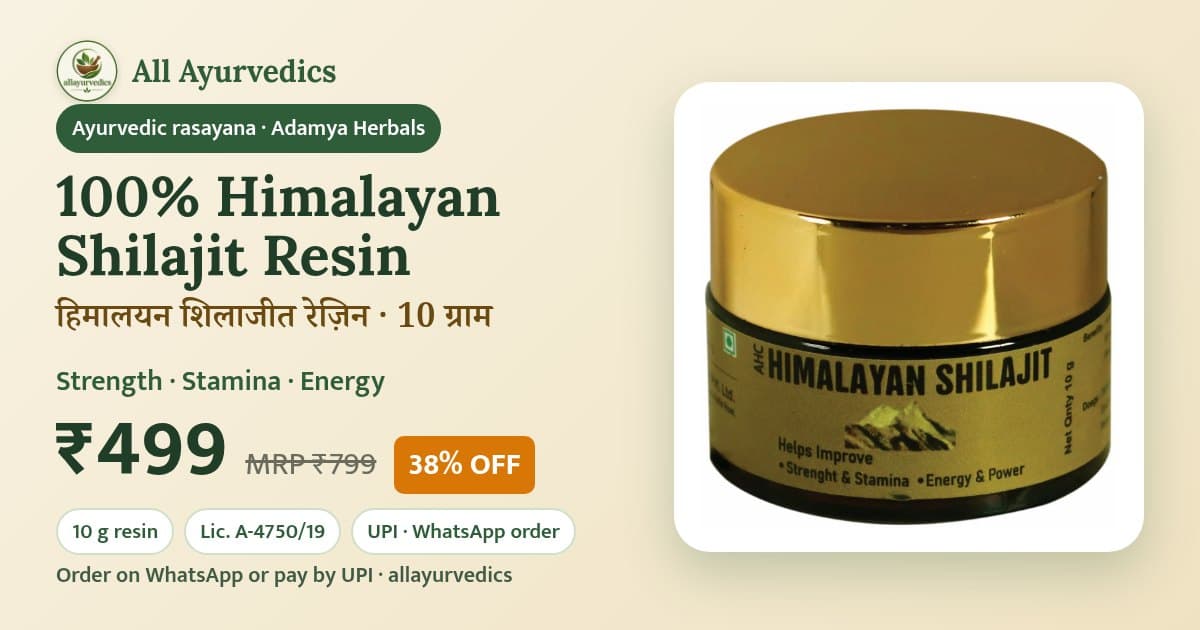
- Manufacturing licence number (for example, our jar shows Mfg. Lic. No. A-4750/19)
- Batch number, manufacturing date and expiry / best-before date
- Net quantity (for example 10 g) and MRP
- Dose and cautions
If a product has no licence number, no batch details or no address, avoid it. This matters far more than any home test.
2. Buy from a trusted seller
Loose "Himalayan shilajit" sold by weight without a label, or through anonymous ads, is risky. Raw or unpurified shilajit may contain impurities, including heavy metals, which is why purified, labelled products from licensed makers are recommended.
3. Simple home checks for shilajit resin
These are rough guides only:
- Look: genuine resin is dark brown to black and has a glossy surface.
- Warmth test: it is firm or even hard when cool, and turns soft and stretchy with the warmth of your fingers. It should not stay runny like syrup at room temperature, or stay rock-hard in your hand.
- Water test: a small piece dissolves almost completely in warm water within a few minutes. The water turns golden-brown to dark brown, with little or no gritty residue at the bottom.
- Smell and taste: strong, earthy and slightly bitter. It should not smell sweet or of chemicals.
Tests that are not reliable
You may see advice to burn shilajit with a flame or drop it into cold water and watch for "threads". These tests are unreliable and burning a product can be unsafe. A lab report from the manufacturer (if available) and a proper label tell you much more.
Resin, capsule or powder — which is easiest to check?
Resin is the least processed form and the easiest to inspect at home. With capsules and powders you cannot see or test the shilajit itself, so the label and brand become even more important. See shilajit resin vs capsule vs powder.
Our product
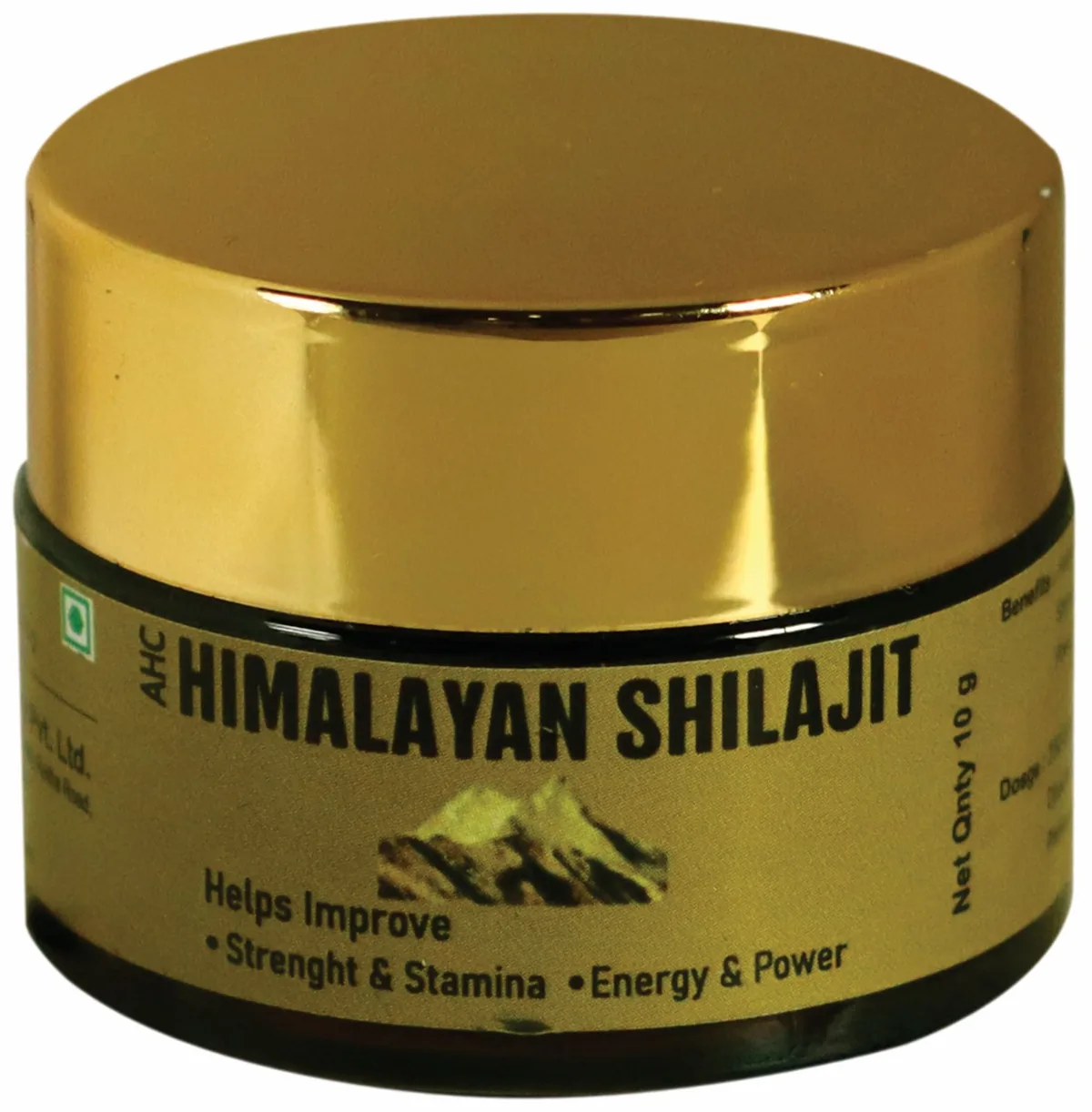
Adamya Herbals Himalayan Shilajit Resin, 10 g comes in a sealed amber glass jar with the manufacturer's licence number (A-4750/19), dose and cautions on the label. The price is ₹399 (MRP ₹799). Order here.
Doctor's note
Even genuine shilajit is not for everyone. Children under 12, pregnant and breastfeeding women, and people with a heart condition, gout or high uric acid, iron overload, a chronic illness or on regular medicines should consult a doctor first. See shilajit side effects and our shilajit guide.
Frequently asked questions
How can I check if shilajit is original at home?
- Genuine resin is dark and glossy, firm when cool and soft with finger warmth, and dissolves almost completely in warm water with little residue. These are rough guides only — a proper label with a licence number matters more.
Does pure shilajit dissolve completely in water?
- Good-quality resin dissolves almost completely in warm water within a few minutes, turning it golden-brown to dark brown, with little or no gritty residue.
Is the flame (burn) test for shilajit reliable?
- No. Burn tests are not reliable and can be unsafe. Check the label, licence number and seller instead.
What should an original shilajit label show?
- The manufacturer's name and address, manufacturing licence number, batch number, manufacturing and expiry dates, net quantity, MRP, dose and cautions.
Shilajit guides
Benefits, how to take it, pure vs fake, forms, side effects and price — in plain language.
- Shilajit benefits: what Ayurveda traditionally uses it forWhat shilajit is, the benefits Ayurveda traditionally describes — strength, stamina, energy and vitality — and the honest limits of what a supplement can do.
- How to take shilajit resin: dose, timing and the right wayA step-by-step guide to taking shilajit resin — how much, when, with water or milk, how long to continue, and the common mistakes to avoid.
- Shilajit resin vs capsule vs powder: which form should you choose?An honest comparison of shilajit resin, capsules, powder and gummies — processing, dosing, convenience and what to check on each label.
- Shilajit side effects: precautions and who should avoid itPossible side effects of shilajit, who should not take it or should check with a doctor first, and simple ways to use it more safely.
- Shilajit price in India: how to compare and what to look forHow to compare shilajit prices fairly — per gram and per day — why very cheap shilajit is a warning sign, and what our 10 g resin costs.
Related remedies
 Neem: the village pharmacy for skin, scalp and home hygieneNeem has been called the ‘village pharmacy’ of India. Its bitter leaves are mostly used externally — in bath water, face packs, hair rinses and as a natural insect deterrent — and occasionally in food, such as neem-flower dishes during Ugadi.
 Desi ghee: making it at home and enjoying it in the right amountGhee is central to Ayurvedic cooking and healing — used for tempering, as a carrier for herbs, for oil massage and for dry skin and lips. Homemade ghee from malai is easy and aromatic. The key is balance: a teaspoon or two a day suits most people, not ladlefuls.
 Dhania Benefits and Uses at HomeDhania means both coriander seeds and the fresh leaves. Soak the seeds for a mild cooling water, and use the leaves the way you already do in dal and chutney.
Related products
Get a weekly dose of Ayurveda
One seasonal tip, one remedy and one simple habit — every week, in English or Hindi. No spam, unsubscribe any time.