How to color hair naturally with henna and indigo: a two-step method for brown to black shades
If you want to cover greys without ammonia or PPD, learning how to color hair naturally with henna (mehendi) and indigo (neel) is worth the effort. Henna alone gives orange-red tones; applying indigo over it turns hair brown to black. Here's the two-step method, with tips for even, long-lasting colour.

How to color hair naturally: why henna and indigo work together
Henna leaves contain lawsone, which binds to the keratin in hair and stains it red-orange. Indigo leaves contain a blue dye that sits over the henna layer; together they produce shades from warm brown to deep black. Unlike chemical dyes, they coat the hair rather than lifting its natural colour, and they also add body and shine.
In Ayurveda, henna (mendhika) is considered cooling and is traditionally applied to calm pitta heat in the scalp. Amla powder is often added to the mix to condition the hair and deepen the tone.
Ingredients
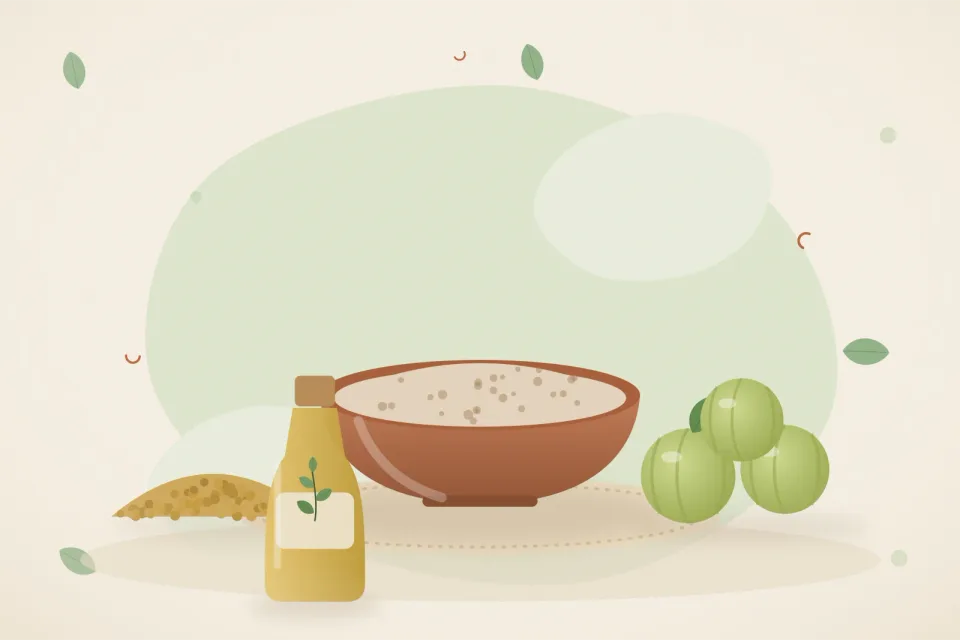
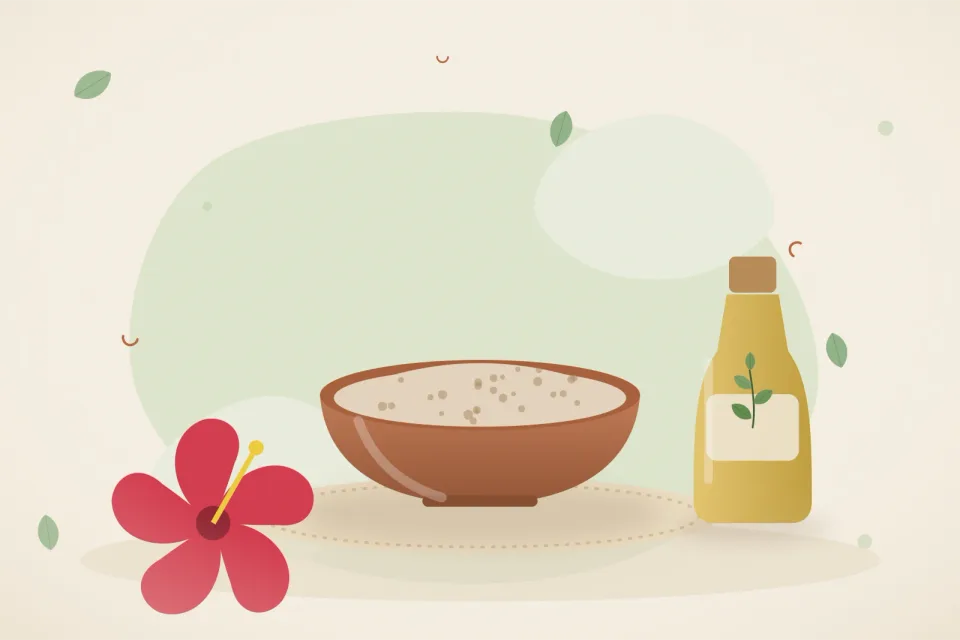
- Body-art-quality or pure henna powder (enough for your hair length, typically 100–200 g)
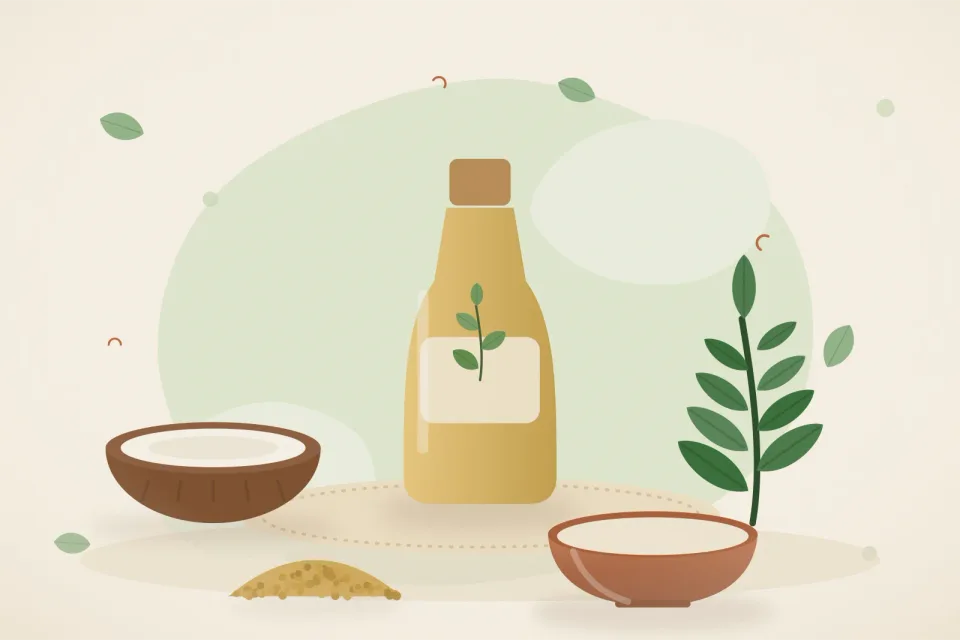
- Pure indigo powder (same quantity as henna)
- Warm water, 1–2 tablespoons amla powder (optional)
- Gloves, an old towel and a plastic cap
How to prepare
- Mix henna (and amla) with warm water into a thick yoghurt-like paste. Cover and leave for 4–8 hours to release the dye.
- Mix indigo with warm water and a pinch of salt just before use — indigo loses strength if left standing.
How to use
- Apply henna to clean, dry hair section by section; cover and leave for 1–2 hours, then rinse with water only (no shampoo).
- Towel-dry, apply the indigo paste the same way, leave for 1–2 hours and rinse with water.
- Avoid shampoo for 24–48 hours; the colour deepens over two days. Touch up roots every 4–6 weeks.
Helpful habits
- For light brown, mix henna and indigo in one paste instead of two steps.
- Apply a little oil on the hairline and ears to prevent staining.
- Henna is drying for some — oil your hair the next day.
Precautions
- Always do a strand and patch test 48 hours before. Never use 'black henna' products that contain PPD — they can cause severe allergic reactions.
- Chemical colouring over henna can react unpredictably; wait for henna to grow out or test a strand.
- Henna must never be applied to babies (it can be dangerous for infants with G6PD deficiency). Pregnant women should use only pure, additive-free henna after a patch test.
Frequently asked questions
Can henna and indigo turn grey hair black?
- Yes. The two-step method usually gives dark brown to black on greys. Very resistant greys may need a second indigo application.
Is natural hair colour safe for everyone?
- Pure henna and indigo are usually safe, but allergies happen. Always patch test and avoid products with added chemicals or PPD.
How long does natural henna colour last?
- Henna is permanent on the dyed hair; indigo may fade slightly over weeks. New growth at the roots needs touch-ups every month or so.