Digestion3 min
Isabgol (psyllium husk): a simple daily fibre habit
Isabgol is one of the most useful things in an Indian medicine cabinet: a soft, natural fibre that makes hard stools easier to pass and can also firm up loose ones. The key is taking it with enough water.

The Ayurvedic view
Isabgol is the husk of the Plantago ovata seed, grown widely in Gujarat and Rajasthan. When it meets water it swells into a smooth gel. In the gut this gel adds bulk and moisture, which is why it helps both constipation and, taken with curd, mild loose stools. Ayurveda values it as cooling and soothing — gentler than harsh purgatives, and suitable for regular use when the diet is low in fibre.
Ingredients
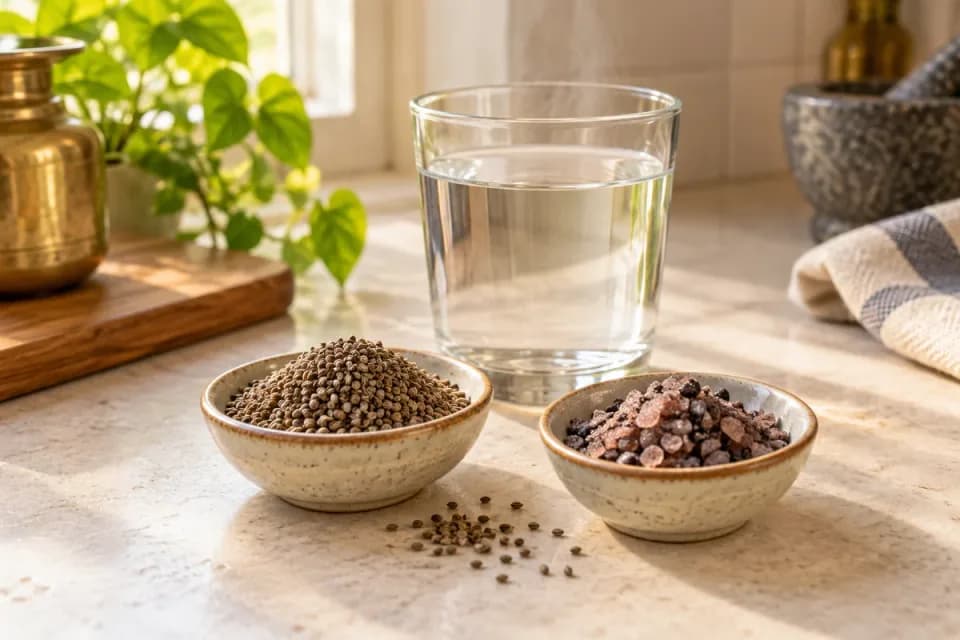
- 1–2 teaspoons isabgol husk
- 1 glass (250 ml) water or warm milk for constipation
- Or ½ cup fresh curd for loose stools
How to prepare
- Stir the isabgol into the water or milk and drink immediately, before it thickens.
- For loose stools, mix it into curd and eat it at once.
How to use
- For constipation: take at bedtime, followed by another glass of water.
- For mild loose motions: 1 teaspoon in curd once or twice a day, alongside ORS.
- Start with 1 teaspoon and increase slowly to avoid gas.
Helpful habits
- Isabgol works best as part of a fibre-rich diet with fruit, vegetables and whole grains.
- Keep a 2-hour gap between isabgol and other medicines, since it can slow their absorption.
Precautions
- Always take with plenty of water — taken dry or with too little water it can cause choking or blockage.
- Avoid if you have difficulty swallowing, a narrowed gut or bowel obstruction.
- People with diabetes should check with their doctor, as isabgol can affect sugar levels and medicine timing; choose sugar-free versions.
- For children, pregnancy, or constipation lasting more than two weeks, consult a doctor.